You’re sitting at your desk in Brisbane, a cold XXXX Gold in hand, spinning the reels on your favourite pokie. The symbols line up, the credits roll in, and you think: “Is this actually random, or is the house pulling a swifty?” That’s where RNG certificates come into play. For every fair dinkum online casino operating in Australia – or targeting Aussie punters – these certificates are the backbone of trust.
The Australian online gambling market is a peculiar beast. Strict local laws under the Interactive Gambling Act 2001 mean licensed domestic operators can’t offer online casino games, but offshore platforms still chase our dollars. To win over savvy locals, these sites need more than flashy graphics and a big welcome bonus. They need proof that their games are straight-up random. That proof comes from independent testing labs that audit the Random Number Generator (RNG) software and issue a certificate. Without it, a casino might as well be running a two-up game in a shady laneway.
How RNG Certification Builds Trust Down Under

Let’s break down the mechanics. An RNG is a piece of code that generates thousands of numbers per second. Each number corresponds to a symbol on a reel or a card in a deck. The casino’s software picks one number at the exact moment you hit “spin,” and that determines your outcome. If the RNG is flawed, the house could tilt the odds in its favour without anyone noticing. That’s why certification exists.
Independent labs like eCOGRA, iTech Labs, and GLI put the RNG through rigorous statistical tests. They check for patterns, biases, and predictability. If the algorithm passes, the lab issues a certificate that the casino displays – usually at the bottom of connexxionambulancezorg.nl the homepage. For an Aussie player, seeing that seal is like seeing a “licensed venue” sign on a pub door. It means the game is giving you a fair go.
Noah Foster, Payments Strategy Director at Pacific Wager Analytics, puts it bluntly: “A certified RNG is the single most important piece of evidence a casino can show that it isn’t rigging the game. Without it, you’re essentially gambling on the operator’s honesty alone – and that’s not a bet most punters want to take.”
The Regulatory Landscape: ACMA and the Offshore Factor
Australia’s gambling regulator, the Australian Communications and Media Authority (ACMA), has been cracking down on illegal offshore operators. They block websites and issue fines. But the reality is that many reputable offshore casinos still accept Aussie players, and they do so by complying with international standards – including RNG certification.
These platforms know that Australian players are among the most discerning in the world. We grew up with pokies in every pub and club; we know a dodgy machine when we see one. So to win our business, offshore casinos voluntarily submit to the same testing that land-based venues undergo. They display certificates from labs that are recognised globally, often with links to the lab’s verification page.
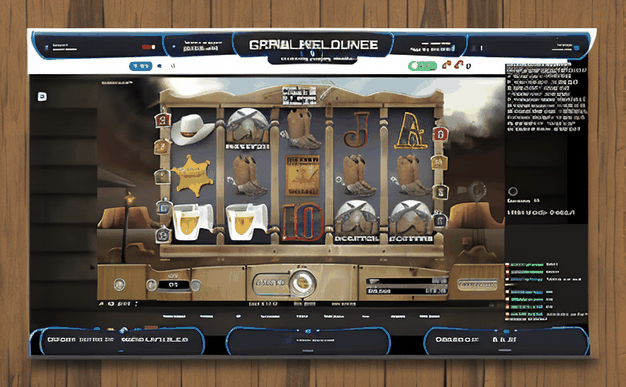
The technical side is worth understanding too. Modern RNGs use cryptographic algorithms – the same kind that secure your online banking. They are seeded with entropy sources like mouse movements or atmospheric noise. This isn’t some bloke in a back room pulling levers; it’s hardcore maths. But maths alone isn’t enough. The certificate proves that the implementation hasn’t been tampered with since the last audit.
Live Dealer Games and the RNG Question
What about live dealer games? Surely a real human dealing cards doesn’t need an RNG. Not exactly. Even in live casino streams, there are often virtual elements – like the shuffle of a digital shoe or the spin of a roulette wheel that uses a random number to determine the ball’s landing position. Isla Hill, Head of Live Casino at Pacific Wager Analytics, explains: “In live dealer blackjack, the physical cards are shuffled by a machine, but many tables also use a digital cut card or a random number to decide when to reshuffle. That RNG needs to be certified too, otherwise the whole game’s integrity is compromised.”
So even if you’re watching a croupier in a studio in Malta, the underlying randomness is still being verified by a third party. For Aussie players who love the social buzz of a live table, that certificate is the difference between a genuine experience and a pre-recorded show.
Pokies, Progressive Jackpots, and the Ugga Bugga Slot
No discussion of Australian gambling is complete without pokies. Online pokies are the bread and butter of most offshore casinos targeting our market. They come in every theme imaginable – from ancient Egypt to bush tucker. One standout is the ugga bugga slot, a game that has become something of a cult favourite among Aussie punters. It’s a simple, three-reel slot with a quirky Aboriginal-inspired theme, and its appeal lies in its straightforward, high-volatility action.
But even a simple pokie like Ugga Bugga relies on a certified RNG to determine every spin. Progressive jackpot slots, which can pay out life-changing sums, are especially scrutinised. The RNG must ensure that the jackpot trigger is truly random and not skewed by the casino to delay a win. Certification labs run millions of simulated spins to verify the odds match the published figures. If you’ve ever wondered why a casino proudly displays a certificate from eCOGRA or iTech Labs, it’s because they want you to know that when you hit that big win, it’s not a fluke – it’s a statistically verified event.
Comparing the Market: Who’s Getting It Right?
Not all casinos treat RNG certification the same way. Some bury the certificate link in the footer; others plaster it on every page. The leaders in the Australian market go further. Joe Fortune, for instance, is widely regarded as one of the most transparent operators for Aussie players. They not only display their RNG certificate prominently but also provide a direct link to the testing lab’s verification page. You can check the certificate number against the lab’s database to confirm it’s current.
Other platforms might use older certificates or fail to renew them on time. A savvy punter should always check the date. If the certificate expired six months ago, that’s a red flag. The best casinos also undergo regular re-audits – every six months or annually – to ensure the RNG hasn’t been modified. This level of transparency is what separates the fair dinkum operators from the cowboys.
How to Verify an RNG Certificate Like a Pro
You don’t need to be a statistician to check if a casino’s RNG is legit. Here are a few practical tips for the average Aussie punter:
- Look for the certification logo at the bottom of the casino’s homepage. Common ones are eCOGRA, iTech Labs, and GLI. Click on it – it should take you to the lab’s verification page where you can enter the certificate number.
- Check the certificate’s issue and expiry dates. If it’s expired, the casino might be operating without current oversight. Move on.
- Cross-reference the casino’s name with the lab’s list of certified operators. Some dodgy sites fake logos. A quick visit to the lab’s website will confirm.
- Read the fine print on the game’s help page. Many casinos list the RNG provider and the lab that tested it. If you see “proprietary RNG” with no third-party audit, treat it with suspicion.
- Use independent review sites that aggregate certification data. If a casino has multiple complaints about unfair payouts, their certificate might be worthless.
Remember, a certificate is only as good as the lab that issued it. Reputable labs are themselves accredited by international bodies like the International Organization for Standardization (ISO). If the lab isn’t well-known, do a quick search. The Australian gambling community is tight-knit; forums like those on Whirlpool or Reddit often discuss which casinos have valid certificates.
The Future of RNG Certification in Australia
As technology evolves, so does the certification process. Blockchain-based RNGs are emerging, where the random number generation is recorded on a public ledger. This gives players the ability to verify each spin’s randomness themselves. Some forward-thinking casinos are already experimenting with provably fair algorithms, though they remain a niche in the Australian market.
Regulation is also tightening. The ACMA has been increasingly active, and there’s talk of requiring all offshore casinos targeting Aussies to hold a recognised RNG certificate as a condition of being allowed to advertise. A recent report from itnews.com.au highlighted that the government is considering a licensing framework for offshore operators, which would mandate independent testing. If that happens, RNG certificates will become a legal requirement rather than a voluntary badge of honour.
At the same time, responsible gambling advocates are pushing for more transparency. A certified RNG doesn’t just protect the player from rigging – it also helps the casino demonstrate that their games are fair, which can reduce problem gambling complaints. If a player loses, they can at least be confident it was bad luck, not a stacked deck. That distinction matters. As healthtimes.com.au notes, trust in the fairness of games is a key factor in reducing gambling-related harm. When players believe the system is rigged, they’re more likely to chase losses or develop unhealthy behaviours.
So the next time you sign up for an online casino, take thirty seconds to find that RNG certificate. It’s not just a piece of digital paper – it’s your guarantee that the game is giving you a fair shake. And in a market as competitive as Australia’s, that’s worth its weight in gold nuggets.